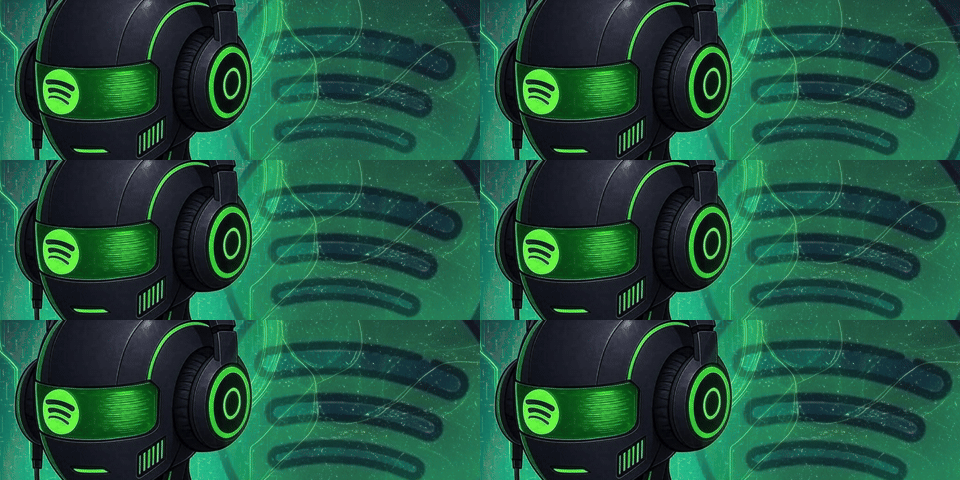
Spotify has officially launched its Responsible AI initiative, partnering with major labels like Sony Music Group, Universal Music Group, Warner Music Group, and independent rights networks including Merlin and Believe. The platform presents this as “artist-first,” promising tools that let creators control if, how, and when their work is used in AI-driven music.
Yet, behind the PR, Spotify’s move reflects a bigger reality: AI is rapidly becoming the future of music, and the platform wants to lead that space. For artists, this is both an opportunity and a risk. While AI tools could help creators experiment, remix, and reach new audiences, they also reinforce Spotify’s position as a central gatekeeper in AI music.
Alex Norström, Spotify’s Chief Business Officer: “Technology should always serve artists, not the other way around.”
Why This Matters for Artists
Over the past year, AI music has surged in popularity—from AI-generated remixes to fully synthetic tracks. For creators, the question isn’t whether to engage with AI—it’s how to protect their rights while doing so.
Rob Stringer, Chairman of Sony Music Group: “The collaboration reflects a belief that direct licensing before product launches is the only appropriate way to build them.”
Entertainment lawyer Sarah Jennings advises:
“AI is no longer optional for music creators. Artists need to ensure their copyright is secure before licensing work to platforms. Otherwise, control over your creations can slip away in AI-driven ecosystems.”
Red Flags for Artists
Despite the promise of “artist-first” AI tools, there are several potential pitfalls:
- Lack of clarity in control – It’s unclear how Spotify will enforce artist choices and rights in practice.
- Royalties and licensing gaps – Tracking AI-generated content royalties could be difficult, especially for independent artists.
- Power imbalance – Major label catalogs may benefit more than independent creators.
- Corporate priorities – While presented as “responsible AI,” Spotify ultimately profits from scaling AI content.
Robert Kyncl, CEO of Warner Music Group: “Spotify’s thoughtful AI guardrails are a step in the right direction.”
Tips for Artists to Take Control of Their Rights in the AI Era
- Register Your Copyrights
Make sure every track, composition, and recording is properly registered. - Clarify AI Usage in Contracts
Explicitly state whether your work can be used for AI generation. Avoid blanket permissions. - Consider Direct Licensing Options
Negotiate deals directly with platforms or services whenever possible to retain control. - Track Royalties and Contributions
Use tools to monitor AI-generated uses of your music and ensure proper payment. - Stay Educated on AI Trends
Keep up with AI music technology, legal developments, and platform policies.
“A work created solely through AI is not copyrightable, but a work that combines human creativity with AI can be copyrighted, so long as there is a ‘sufficient’ amount of human expression in that work.”
— U.S. Copyright Office Music Mentor
The Takeaway
Spotify’s AI music push signals the future is here. Engaging with AI can help artists innovate and reach new audiences—but it also shifts some control to the platforms leading this technology. By taking ownership of their copyrights, negotiating clear usage terms, and staying informed, artists can embrace AI without losing control of their work.
Denis Ladegaillerie, CEO of Believe: “We’re thrilled to partner with Spotify to co-develop ‘value-creative AI’ tools that will fuel artist development and unlock new creative and commercial opportunities.”
AI is inevitable in the music industry. Spotify may be leading the charge, but the future belongs to artists who understand their rights and actively protect them.
Leave a Reply